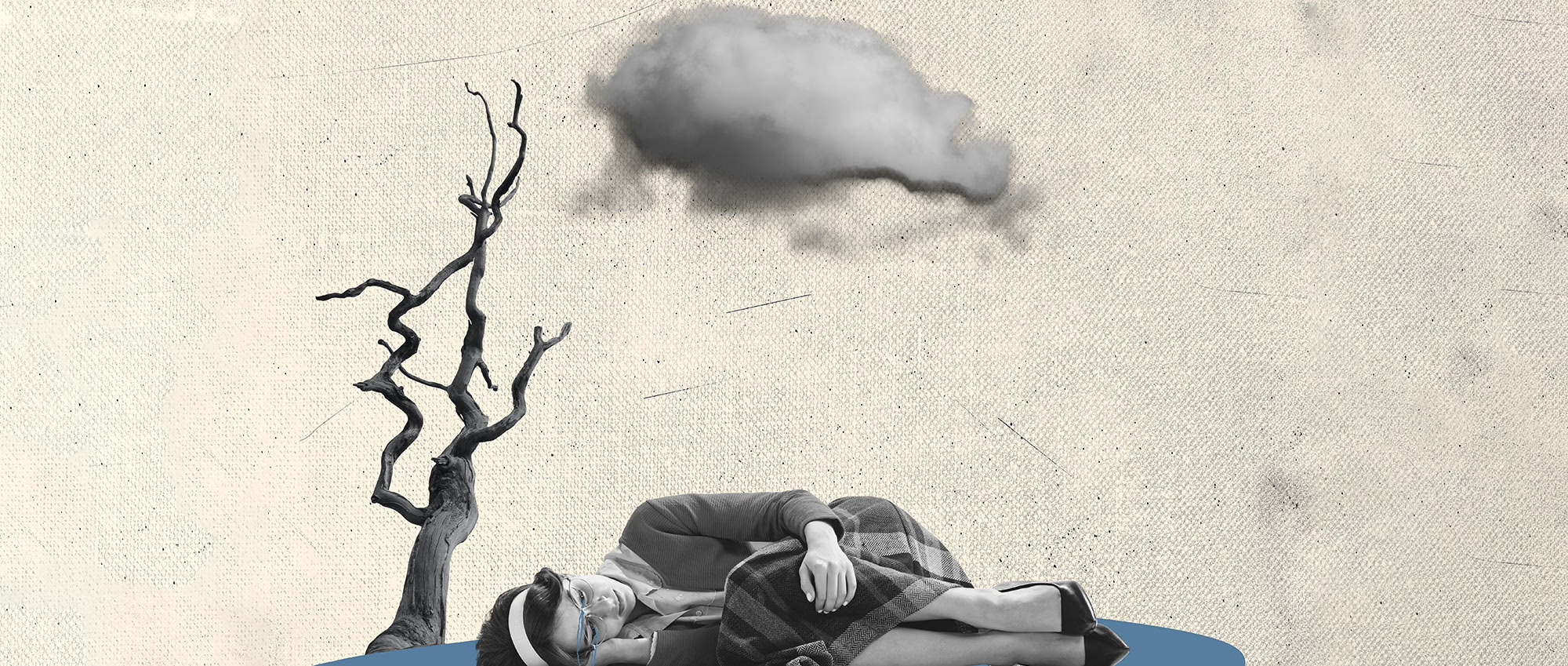
Grief is one of the most universal human experiences. Yet paradoxically, it is also one of the most misunderstood.
When someone you love dies, the world does not stop moving. The grocery store is still open. Work emails still arrive. People still expect you to function. And while the outside world continues as if nothing has changed, inside you may feel as if everything has.
For many people, grief creates a deep sense of emotional isolation. The pain can feel overwhelming, confusing, and at times impossible to explain to others.
This is one reason many people turn to grief counseling or grief therapy to help them navigate the complex emotional landscape of loss.
The Loneliness That Often Follows Loss
Many people assume that support will naturally surround them after a loss. In the early days, this is often true. Friends bring food. Family members call. People attend the funeral and offer condolences.
But then something subtle begins to happen.
Life moves forward for everyone else.
The phone calls slow down. Invitations stop coming. Conversations become shorter. Some people avoid the topic altogether.
You may even hear comments like:
“The funeral was weeks ago.”
“They would want you to move on.”
“Try to stay positive.”
These statements are rarely meant to be cruel. Most of the time, they reflect discomfort rather than lack of care.
As a society, we are simply not very skilled at sitting with grief.
Death reminds people of their own mortality. It brings up emotions many people would rather avoid. Others may have never experienced significant loss themselves, which makes it difficult for them to understand the depth of the pain.
Unfortunately, this often leaves grieving individuals feeling abandoned during the very time they need support the most.
Why Grief Can Feel So Overwhelming
Grief is not just sadness.
It can include:
- A deep sense of emptiness
- Anger or resentment
- Guilt about things left unsaid
- Anxiety about the future
- Difficulty concentrating
- Physical exhaustion
- Changes in sleep or appetite
- A loss of meaning or direction
Many people also experience waves of grief that appear unexpectedly. A song, a smell, a familiar place, or even a random memory can suddenly bring the loss rushing back.
This unpredictability can make people question whether something is wrong with them.
The truth is that grief does not follow a neat timeline. There is no universal schedule for healing.
Why Talking to a Neutral Therapist Can Help
One of the most powerful aspects of therapy for grief is the presence of a neutral, compassionate space.
A therapist is not trying to fix your grief, rush your healing, or change the subject.
Instead, therapy allows you to:
- Speak openly about the person you lost
- Process complicated emotions such as guilt, anger, or regret
- Explore how the loss has changed your identity or sense of self
- Work through the fear of forgetting the person you loved
- Find ways to carry the relationship forward while still moving ahead in life
For many people, talking to a neutral third party actually makes it easier to express the deepest parts of their grief.
Family members may be grieving too. Friends may unintentionally offer advice or attempt to cheer you up. A therapist simply holds space for the truth of what you are experiencing.
Sometimes that is exactly what healing requires.
When Grief Gets Stuck
Most grief evolves gradually over time. The pain softens, memories become more integrated, and life slowly begins to expand again.
However, some people feel as if they remain stuck in their grief.
They may feel unable to move forward, overwhelmed by guilt, or trapped in constant rumination about the loss. Others struggle with complicated grief after sudden deaths, traumatic losses, or the death of a spouse or child.
In these situations, grief counseling can be particularly helpful.
Therapy helps untangle the emotional knots that can develop after a major loss and provides tools to help people rebuild a sense of stability and meaning.
The Role of Therapy Intensives in Grief Healing
While traditional weekly therapy sessions can be very helpful, some individuals benefit from a deeper and more focused format known as a therapy intensive.
A therapy intensive allows individuals to spend several hours or an entire day working through grief in a structured and supportive environment.
This approach can be especially powerful for people who:
- Feel emotionally overwhelmed by their loss
- Want to process grief more deeply in a shorter period of time
- Have limited time for ongoing weekly therapy
- Feel stuck and want meaningful forward movement
During a grief therapy intensive, we are able to move beyond surface level conversations and explore the deeper layers of grief, memory, identity, and healing.
Many people find that this focused time creates breakthroughs that might otherwise take months in traditional therapy.
You Do Not Have to Carry Grief Alone
One of the most painful myths about grief is the belief that we must simply endure it quietly.
In reality, grief is meant to be witnessed.
Speaking about your loss does not mean you are weak. It means you are human. The love you had for the person who died deserves space, attention, and care.
Therapy offers a place where your grief is not rushed, minimized, or misunderstood.
It offers a place where your story can be heard.
Grief Counseling in Overland Park and the Kansas City Metro
If you are struggling with grief and loss, therapy can provide compassionate support as you navigate this difficult chapter.
At Blackbird Therapy, I work with individuals experiencing grief, major life transitions, medical trauma, and the emotional impact of loss. Therapy is available for residents of Overland Park and throughout the Kansas City Metropolitan Area, as well as for individuals who are willing to travel for therapy intensives.
Whether you are seeking traditional therapy or a focused grief therapy intensive, support is available.
You do not have to walk this path alone. Healing begins when your grief is finally given the space it deserves.



Grief is one of the most universal human experiences. Yet paradoxically, it is also one of the most misunderstood.
When someone you love dies, the world does not stop moving. The grocery store is still open. Work emails still arrive. People still expect you to function. And while the outside world continues as if nothing has changed, inside you may feel as if everything has.
For many people, grief creates a deep sense of emotional isolation. The pain can feel overwhelming, confusing, and at times impossible to explain to others.
This is one reason many people turn to grief counseling or grief therapy to help them navigate the complex emotional landscape of loss.
The Loneliness That Often Follows Loss
Many people assume that support will naturally surround them after a loss. In the early days, this is often true. Friends bring food. Family members call. People attend the funeral and offer condolences.
But then something subtle begins to happen.
Life moves forward for everyone else.
The phone calls slow down. Invitations stop coming. Conversations become shorter. Some people avoid the topic altogether.
You may even hear comments like:
“The funeral was weeks ago.”
“They would want you to move on.”
“Try to stay positive.”
These statements are rarely meant to be cruel. Most of the time, they reflect discomfort rather than lack of care.
As a society, we are simply not very skilled at sitting with grief.
Death reminds people of their own mortality. It brings up emotions many people would rather avoid. Others may have never experienced significant loss themselves, which makes it difficult for them to understand the depth of the pain.
Unfortunately, this often leaves grieving individuals feeling abandoned during the very time they need support the most.
Why Grief Can Feel So Overwhelming
Grief is not just sadness.
It can include:
- A deep sense of emptiness
- Anger or resentment
- Guilt about things left unsaid
- Anxiety about the future
- Difficulty concentrating
- Physical exhaustion
- Changes in sleep or appetite
- A loss of meaning or direction
Many people also experience waves of grief that appear unexpectedly. A song, a smell, a familiar place, or even a random memory can suddenly bring the loss rushing back.
This unpredictability can make people question whether something is wrong with them.
The truth is that grief does not follow a neat timeline. There is no universal schedule for healing.
Why Talking to a Neutral Therapist Can Help
One of the most powerful aspects of therapy for grief is the presence of a neutral, compassionate space.
A therapist is not trying to fix your grief, rush your healing, or change the subject.
Instead, therapy allows you to:
- Speak openly about the person you lost
- Process complicated emotions such as guilt, anger, or regret
- Explore how the loss has changed your identity or sense of self
- Work through the fear of forgetting the person you loved
- Find ways to carry the relationship forward while still moving ahead in life
For many people, talking to a neutral third party actually makes it easier to express the deepest parts of their grief.
Family members may be grieving too. Friends may unintentionally offer advice or attempt to cheer you up. A therapist simply holds space for the truth of what you are experiencing.
Sometimes that is exactly what healing requires.
When Grief Gets Stuck
Most grief evolves gradually over time. The pain softens, memories become more integrated, and life slowly begins to expand again.
However, some people feel as if they remain stuck in their grief.
They may feel unable to move forward, overwhelmed by guilt, or trapped in constant rumination about the loss. Others struggle with complicated grief after sudden deaths, traumatic losses, or the death of a spouse or child.
In these situations, grief counseling can be particularly helpful.
Therapy helps untangle the emotional knots that can develop after a major loss and provides tools to help people rebuild a sense of stability and meaning.
The Role of Therapy Intensives in Grief Healing
While traditional weekly therapy sessions can be very helpful, some individuals benefit from a deeper and more focused format known as a therapy intensive.
A therapy intensive allows individuals to spend several hours or an entire day working through grief in a structured and supportive environment.
This approach can be especially powerful for people who:
- Feel emotionally overwhelmed by their loss
- Want to process grief more deeply in a shorter period of time
- Have limited time for ongoing weekly therapy
- Feel stuck and want meaningful forward movement
During a grief therapy intensive, we are able to move beyond surface level conversations and explore the deeper layers of grief, memory, identity, and healing.
Many people find that this focused time creates breakthroughs that might otherwise take months in traditional therapy.
You Do Not Have to Carry Grief Alone
One of the most painful myths about grief is the belief that we must simply endure it quietly.
In reality, grief is meant to be witnessed.
Speaking about your loss does not mean you are weak. It means you are human. The love you had for the person who died deserves space, attention, and care.
Therapy offers a place where your grief is not rushed, minimized, or misunderstood.
It offers a place where your story can be heard.
Grief Counseling in Overland Park and the Kansas City Metro
If you are struggling with grief and loss, therapy can provide compassionate support as you navigate this difficult chapter.
At Blackbird Therapy, I work with individuals experiencing grief, major life transitions, medical trauma, and the emotional impact of loss. Therapy is available for residents of Overland Park and throughout the Kansas City Metropolitan Area, as well as for individuals who are willing to travel for therapy intensives.
Whether you are seeking traditional therapy or a focused grief therapy intensive, support is available.
You do not have to walk this path alone. Healing begins when your grief is finally given the space it deserves.